May 16, 2026
What The Field Looks Like From Outside
Author
The civic landscape shaping a nonprofit's funding, partnerships, and reach is rarely visible from the inside.
Bird's Eye Impact makes it visible.
There is something I have noticed over many years of working alongside nonprofit leaders in Houston. Most of them can describe their organization with real clarity. They know their mission, their programs, who they serve, and why the work matters. That internal knowledge is deep and hard-earned.
What is harder to come by is the external view. How their organization appears to the funder reviewing a stack of proposals. How a council member's staff perceives the field when they are fielding requests from six organizations serving the same zip code. How a potential partner, scanning the landscape for the first time, makes sense of who does what and where.
That external view is where the decisions get made. And most organizations have never seen it.
The reason is not a lack of effort. It is structural. Day-to-day operations pull leadership inward. Program delivery, board meetings, compliance, and reporting fill the calendar. There is rarely time to step back and scan the field, and when there is, the scan tends to be shallow. A few familiar names. A handful of organizations leadership already knows.
The rest of the ecosystem remains largely invisible.
In a civically fragmented region like greater Houston, that invisibility has real costs. A single service area may hold a dozen organizations addressing the same issue. Some are neighborhood-scale. Others span multiple precincts. Some are deeply connected to one council district. Others move through philanthropic networks that never appear on a public map. From the outside, they form a single field. From the inside, each one believes its work is distinct.
Both are true. And the gap between them is where positioning gets lost.
Here is what happens when organizations cannot see the ecosystem around them. Overlaps go unnoticed until a funder flags them. Messaging that feels precise internally reads as generic externally, because it is built on internal logic rather than a real view of the field. And potential collaborators stay invisible, lumped in with perceived competitors, because no one has mapped the difference.
These are not communication failures. They are the predictable result of operating inside an ecosystem no one has been tasked with seeing.
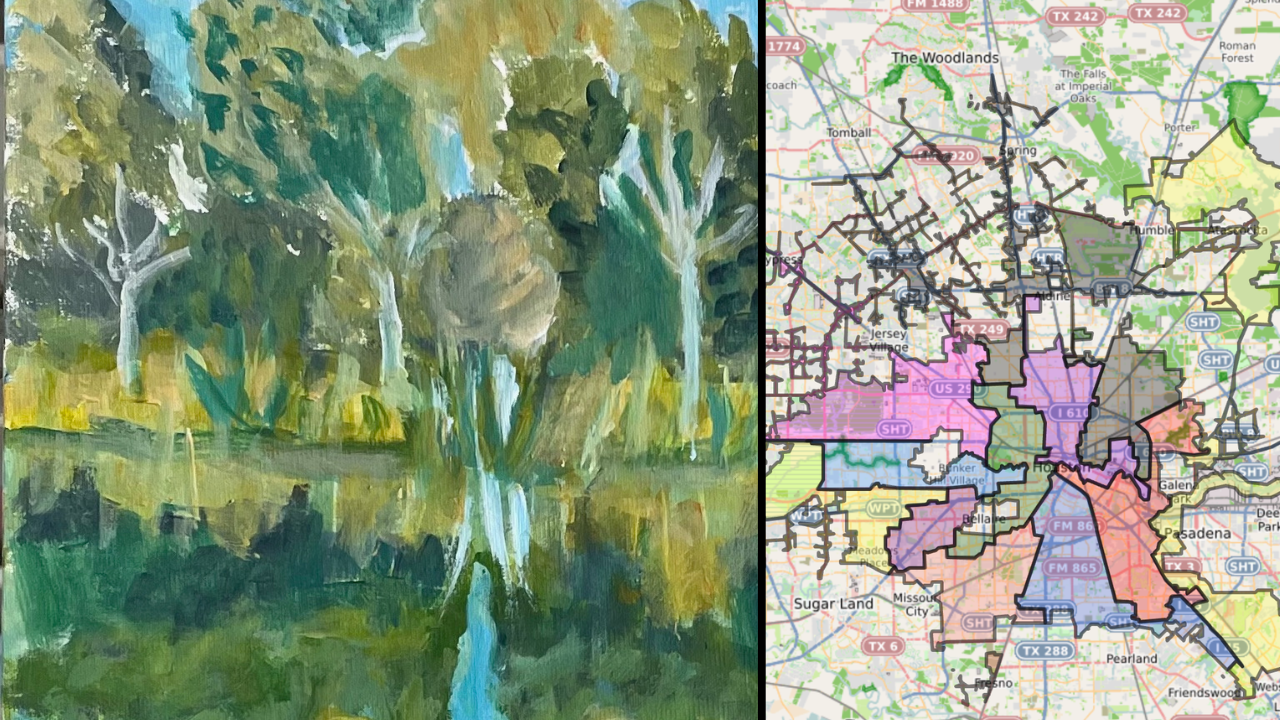
Civic Landscaping changes that. The Competitive Awareness layer of the Bird's Eye Atlas places peer organizations inside the same civic geography, so overlap and differentiation become visible and spatial rather than abstract. It gives leadership a view of the field that matches the view a funder or partner or civic office already holds.
The shift that follows is practical. Messaging is built on what is actually distinctive in the landscape. Partnership conversations start from a place of clarity about who does what and where the real complementarity is. Proposals reflect an honest account of the ecosystem.
Internal clarity is necessary. External clarity is what changes outcomes.
If you have not looked at the field from the outside lately, that is where the work begins.