May 9, 2026
The Real Reason Some Collaborations Never Get Off The Ground
Author
The civic landscape shaping a nonprofit's funding, partnerships, and reach is rarely visible from the inside.
Bird's Eye Impact makes it visible.
Every nonprofit leader I know has been in at least one collaboration that should have worked.
The mission fit was there. The relationship was solid. The need was real. And somewhere along the way, the partnership quietly fell apart. Calendars never aligned. Reports were duplicated. One partner was chasing a city budget cycle while the other was waiting on county commissioners court. The momentum that started so strong just drained away.
We tend to explain these breakdowns in relational terms. Someone was overextended. Priorities shifted. The chemistry was not quite right.
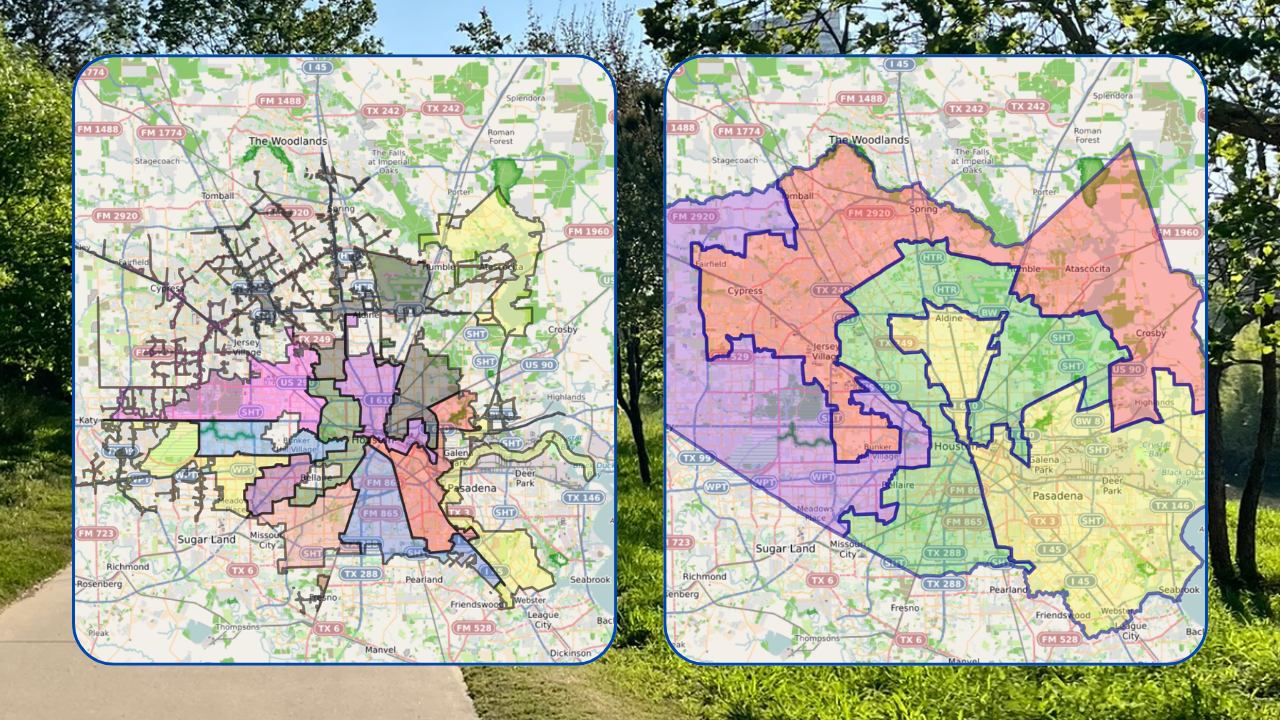
After years of mapping civic landscapes across greater Houston, I have come to believe most of those explanations miss the real cause. The problem was not the people. It was the geography.
Greater Houston is one of the most civically complex regions in the country. A single neighborhood can sit inside a school district, a city council district, a county precinct, a state legislative district, a management district, a TIRZ, and a municipal utility district, all at the same time. Each of those jurisdictions has its own leadership, its own budget calendar, and its own accountability structures.
When two organizations try to collaborate across that terrain without mapping it first, they are negotiating the seams between systems that were never designed to talk to each other. That is a structural problem. And it will outlast any amount of goodwill.
The good news is that structural problems, once named, are workable.
That is what Civic Landscaping does. It makes the invisible visible. Before a partnership is built, we map the civic geographies each organization operates inside. Where do the districts overlap? Where do they diverge? Which funding cycles will shape the timeline? Which decision-makers does each partner already have relationships with?
When organizations have that map at the outset, collaboration changes. Timelines become realistic. Roles become clearer. Joint proposals reflect a coordinated understanding of the landscape rather than two separate descriptions of the same region.
Goodwill is foundational. Every lasting collaboration I have seen was built on real trust between real people. But in a civically fragmented landscape, goodwill is not enough to carry the work. The civic structure underneath the partnership has to be named and accounted for.
That is the shift the Bird's Eye Atlas makes possible. And it is the difference between a collaboration that holds and one that quietly fades.