
April 18, 2026
The Hidden Cost of Civic Fragmentation
Author
The civic landscape shaping a nonprofit's funding, partnerships, and reach is rarely visible from the inside.
Bird's Eye Impact makes it visible.
The friction is real. The problem has a name.
Civic fragmentation doesn't announce itself. It shows up quietly, in the moments that cost you the most.
It's the funding opportunity your organization was perfectly positioned for, that you heard about a week after the deadline. It's the partnership that stalled because neither organization knew who governed the geography between them. It's the accountability gap that nobody holds because responsibility is spread across six overlapping jurisdictions and none of them claim ownership.
Organizations feel this friction constantly. Most have never named it. Naming it is the first step toward navigating it.
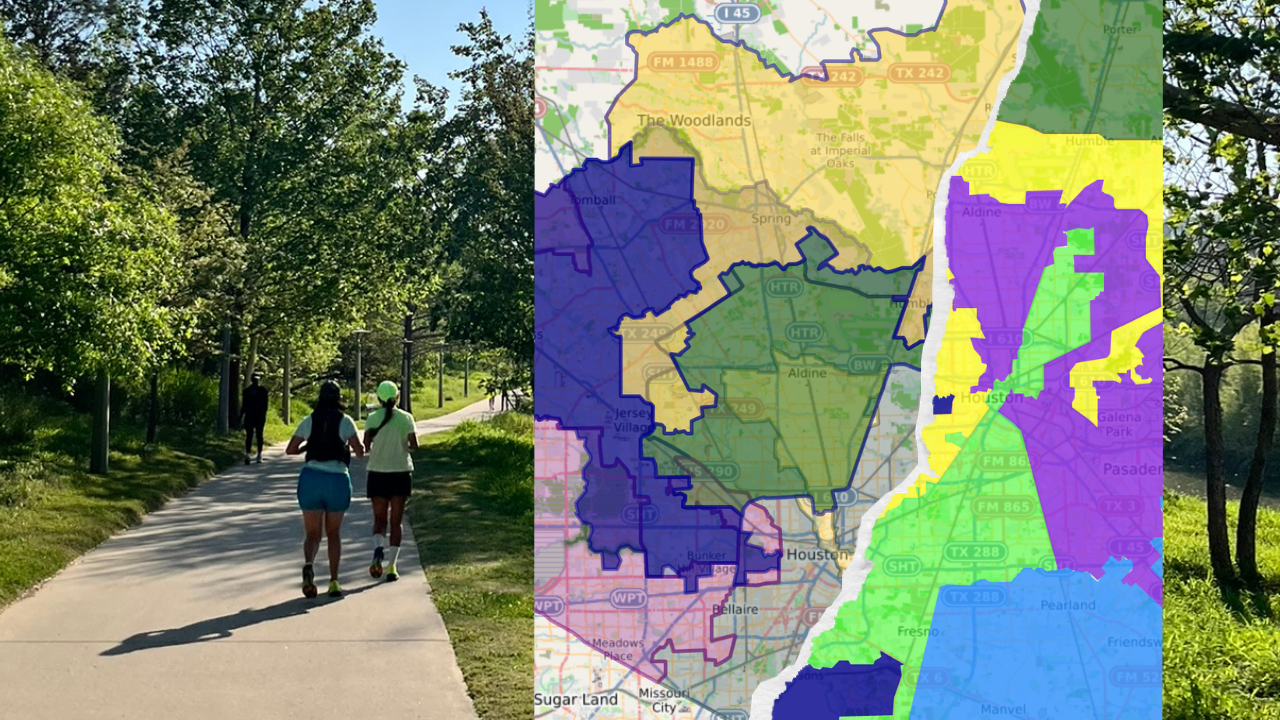
The Friction You Feel Is Structural
Most nonprofit leaders describe some version of the same experience. The programs are strong. The team is committed. The mission is clear. And yet something keeps slowing things down. Partnerships take longer than they should. Funding opportunities surface after the deadline. Coalitions form around the issues that directly affect the communities you serve, and somehow you are not in the room.
The common explanation is capacity. Not enough staff. Not enough time. Those things are often true, but they are not the full story.
The friction many organizations feel is not primarily a capacity problem. It is a structural one. And the structure has a name: civic fragmentation.
A civically fragmented landscape is one where a single community is governed by multiple overlapping authorities, each with different priorities, different boundaries, and different funding mechanisms. In Houston, that means city council districts, county precincts, independent school district boundaries, management districts, municipal utility districts, tax increment reinvestment zones, and state and federal districts — all layered on top of each other, often with no relationship to one another. A single square mile can sit inside six or more jurisdictions simultaneously, each with meaningful influence over the conditions that shape your mission.
What Fragmentation Actually Costs
The costs of operating in a civically fragmented landscape are real and measurable, even when organizations have never connected them to a structural cause.
Missed Funding. In Houston, public funding moves through dozens of channels: city departments, county precincts, management districts, state agencies, federal programs, and private foundations whose priorities are shaped by the geographic conversations they are already part of.
Organizations that don't understand the full map of who funds what in their geography aren't just missing individual opportunities. They are operating without a funding strategy that accounts for the actual landscape. The organizations that consistently access public funding are not always the ones with the strongest programs. They are often the ones that knew which offices to build relationships with before the funding cycles opened.
Duplicated Effort. In a fragmented landscape, organizations working on the same issues in overlapping geographies frequently don't know each other exists. They develop parallel programs, apply for the same grants, and build separate community relationships that could be shared assets. This is a predictable outcome of operating without a shared map — and it is expensive. It costs staff time, organizational energy, and funder confidence. When funders see multiple organizations doing nearly identical work in the same geography, they question whether the ecosystem is healthy. The organizations themselves rarely have enough visibility to answer that question well.
Slow Partnerships. Partnership development in a civically fragmented city requires navigating organizational, jurisdictional, and relational complexity that most organizations have never fully mapped. Two organizations serving overlapping populations may be separated by a council district boundary, a precinct line, or a management district structure that neither has ever surfaced. That boundary doesn't prevent collaboration — but it shapes the funding, the relationships, and the community context in ways that matter. When organizations enter partnership conversations without that context, they spend enormous energy on logistics that civic landscape intelligence would have resolved in the first conversation.
Unclear Accountability. Perhaps the most consequential cost is what happens when something goes wrong. A service gap appears. A community need goes unmet. A program loses funding and clients are left without support. In a fragmented civic environment, accountability is distributed across so many authorities that it becomes genuinely difficult to identify who is responsible. Organizations that know their civic landscape know which office to call, which meeting to attend, and which decision-maker to hold accountable. Organizations that don't often absorb the cost themselves — filling gaps that the civic system should be addressing.
Why Organizations Don't Name It
If this friction is so pervasive, why do so few organizations name it as a structural problem?
Part of the answer is that fragmentation is invisible by design. The civic landscape was not built with nonprofit navigation in mind. Jurisdictions were drawn for administrative and political reasons. Funding streams were created through legislative processes. Management districts were established by property owners. None of it was organized around the question of how a community-serving organization would find its place within it.
When organizations cannot see the structure, they internalize the friction. They attribute slow progress to their own limitations rather than to the complexity of the environment they are navigating. That internalization has real consequences — it leads organizations to invest in capacity-building solutions for problems that are structural in origin. It shapes how leaders talk about their organizations to funders. And over time, it affects morale.
The structural barrier doesn't disappear when you name it. But naming it accurately changes what you do next.
Navigating, Not Simplifying
Civic fragmentation in Houston is not going to be resolved. The overlapping jurisdictions, the distributed funding mechanisms, the complex governance structures — these are features of the environment. The goal is not to wish them away. The goal is to navigate them with clarity.
Navigation requires a map. It requires knowing which jurisdictions cover your service area, which offices hold influence over your issues, which organizations are operating in your ecosystem, and where the structural gaps and opportunities are located.
Organizations with that map move differently. They enter funding conversations earlier. They identify partnership opportunities before the obvious ones are exhausted. They show up in civic processes with the right questions for the right authorities. They can name their position in the ecosystem with precision.
That is what Civic Landscaping makes possible. Not a simpler landscape. A navigable one.
A Question to Carry Into the Week
When your organization hits friction, what story do you tell about why? And is that story pointing you toward the right solution?
At Bird's Eye Impact, we built our practice to make the civically fragmented landscape visible and navigable. The Bird's Eye Atlas gives your organization a complete, accurate, and actionable picture of the external environment you navigate every day. When the full terrain is visible, the path forward becomes clear.