
February 21, 2026
Connection Is Infrastructure
Author
The civic landscape shaping a nonprofit's funding, partnerships, and reach is rarely visible from the inside.
Bird's Eye Impact makes it visible.
“Third spaces,” civic hubs, and why their absence changes everything
Connection is not a soft asset. It is infrastructure. Libraries, parks, arts spaces, community centers, and faith halls function as the connective tissue of civic ecosystems. When these third spaces are limited or absent, neighborhoods do not simply lose gathering rooms. They lose trust pipelines, information flow, and alignment capacity. Strategic leaders who want durable impact must treat connection as infrastructure, map it intentionally, and invest accordingly.
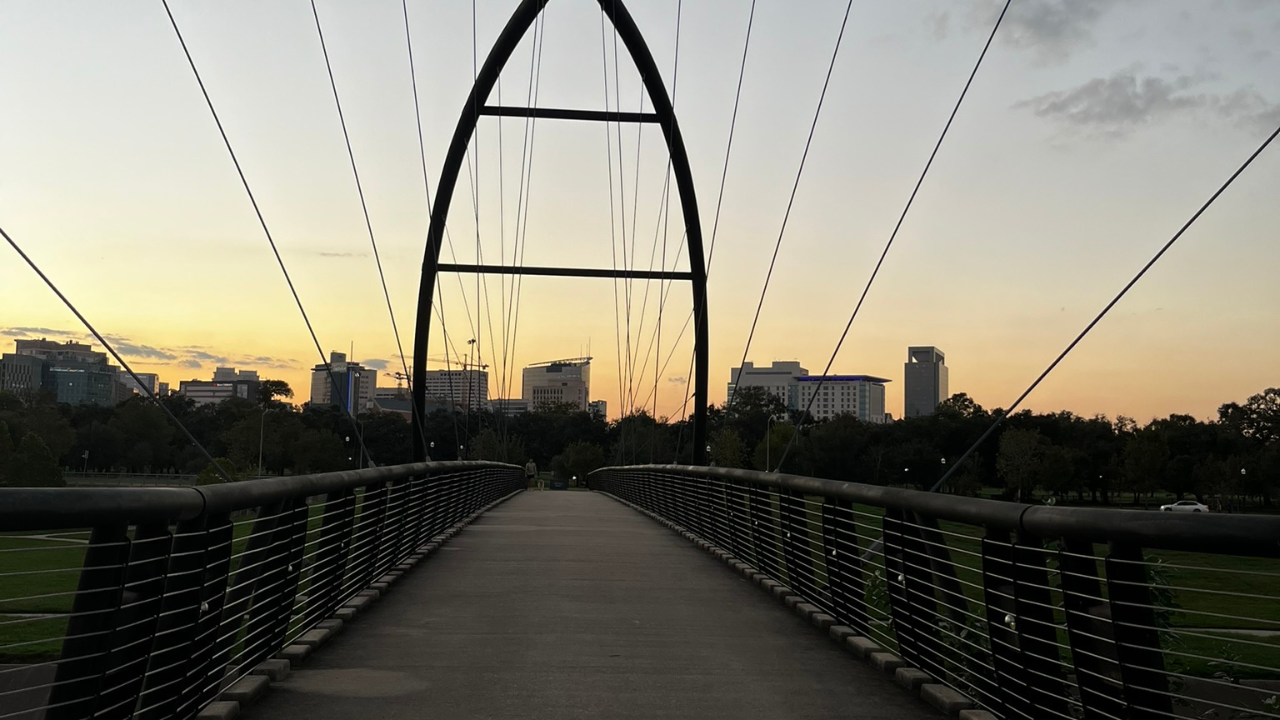
When we think about infrastructure, we picture roads, drainage systems, transit lines, and broadband. These systems move goods, water, and data.
But there is another kind of infrastructure operating in every community.
It moves trust.
It moves relationships.
It moves shared understanding.
Sociologists call them third spaces. They are neither home nor work, but the public environments where community forms organically. Libraries. Community centers. Parks. Arts venues. Cultural festivals. Faith based halls. Recreation centers. Even certain coffee shops and strip center storefronts in cities like Houston, where geography and car culture shape daily life.
The arts belong squarely in this category. A neighborhood mural project. A small theater. A dance studio. A poetry night in a shared space. Arts spaces create cross generational interaction and shared identity. They help communities see themselves. They are civic anchors.
These spaces are load bearing.
They enable:
- Cross generational interaction
- Informal information exchange
- Volunteer recruitment
- Coalition formation
- Civic trust building
When they are strong, ecosystems align more naturally. When they are weak or scarce, fragmentation accelerates.
In our work at Bird’s Eye Impact, we see this clearly through baseline analysis and ecosystem mapping. We map not only services and demographics, but connective nodes, proximity patterns, and alignment opportunities across sectors. Organizations may share geography and population but lack shared connective space. Nonprofits operate within blocks of one another without relational overlap. Public agencies serve the same residents without shared context. Leaders work in parallel rather than in partnership.
Cypress Station offers a clear example. The area has significant density and nonprofit presence. Yet within its defined boundaries, dedicated public gathering space such as libraries and expansive parks is limited. Residents often travel outside the district to access those connective hubs. The result is not simply inconvenience. It affects how trust forms, how information spreads, and how collaboration emerges.
Through our Cypress Station Baseline Analysis and Atlas work, we identified where informal hubs exist, where gaps persist, and where alignment could be strengthened. This is core to the services we provide. We help communities and organizations see their full ecosystem, clarify where connection is strong or strained, and surface opportunities for strategic partnership and coordinated investment.
The absence of connective infrastructure produces predictable outcomes:
- Service duplication
- Funding inefficiencies
- Increased strain on anchor organizations
- Reduced capacity for collective action
When connection is treated as infrastructure, it shifts how public, philanthropic, and private investment decisions are made. Leaders begin to ask not only what programs exist, but where relationships are supported. Not only who is funded, but whether the ecosystem itself is structurally aligned.
Connection does not emerge automatically. It requires proximity. It requires intentional design.
Strategic alignment depends on connection. And connection depends on infrastructure.
For leaders, this raises an essential question.
Are you mapping services or are you mapping connective tissue?
Durable change does not scale in isolation. It scales where relationships are supported by infrastructure that allows people to gather, create, learn, and align.
Infrastructure builds roads. Connection builds ecosystems.